
Blog
Tax Preparation Services in NYC & Long Island: Professional CPA Help for the 2026 Filing Season
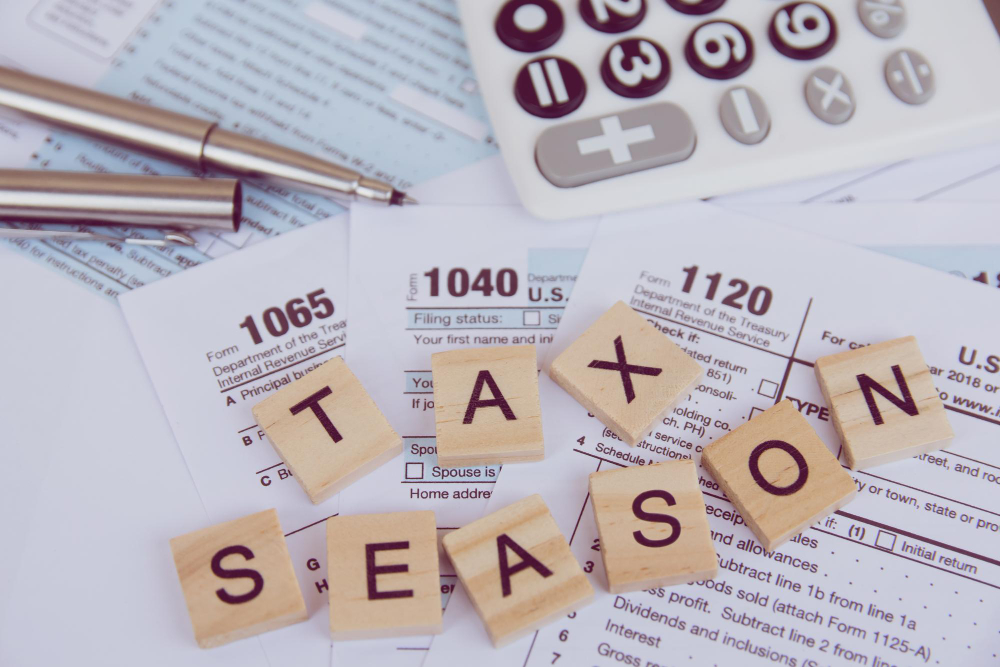
If you’re looking for tax preparation services that actually protect you — not just “get it filed” — this post is for you. The 2026 filing season is live, the IRS started accepting returns on January 26, 2026, and the deadline for most individual taxpayers is April 15, 2026.
But here’s what makes this year genuinely different from any recent filing season: the One Big Beautiful Bill Act changed the tax landscape for nearly every filer in New York. New deductions for tips and overtime. A bigger child tax credit. A brand-new senior standard deduction. And SALT cap adjustments that directly affect households across Manhattan, Brooklyn, Queens, the Bronx, Staten Island, Nassau County, and Suffolk County.
If you’re a W-2 employee, a small business owner, a freelancer with 1099 income, or a retiree trying to figure out what the new senior deduction actually means for you — this is the year where the wrong preparer costs you real money, and the right one saves it.
Sundack CPA provides tax preparation services for individuals and businesses across New York City, Long Island, and Melville NY. This post explains what’s changed, what you need, and how to make a smart hiring decision before the April deadline.
Why the 2026 Filing Season Is Not Business as Usual for New York Taxpayers
Every year, someone says “this year is different.” This year, it actually is — and it’s because of legislation, not hype.
The One Big Beautiful Bill Act (OBBBA), signed into law on July 4, 2025, introduced several changes that are hitting returns for the first time this filing season. If you’re filing individual tax returns for 2025, here’s what matters most.
The new tip income deduction allows workers who receive qualified tips to deduct up to $25,000 annually. That’s a significant break for restaurant workers, hospitality staff, and service industry employees — exactly the kind of workforce you find across New York City and Long Island. But the deduction phases out at higher income levels, which means it needs to be calculated correctly, not just claimed.
The overtime pay deduction is also new for 2025 returns. If you worked overtime hours and your employer reported that income, you may qualify for a deduction on qualifying overtime pay. The IRS has issued guidance, but the rules are detailed — and getting them wrong means either leaving money on the table or triggering a notice.
The child tax credit increased to $2,200 per qualifying child under 17. That’s up from the prior amount, and income phaseout thresholds still apply. For families in high-cost areas like Nassau County and Suffolk County, this credit interacts with state-level calculations in ways that a generic tax software won’t flag.
A brand-new senior standard deduction of up to $4,000 for single filers and $8,000 for joint filers is available to taxpayers age 65 and older. This is on top of the existing additional standard deduction for seniors. However, it phases out based on modified adjusted gross income — starting at $75,000 for single filers and $150,000 for joint filers. For retirees on Long Island or in any of the five boroughs, those income thresholds can sneak up fast when you factor in Social Security, pension distributions, and investment income.
The SALT deduction cap was raised to $40,000 for most filers (phasing down for higher incomes). For New York City households who’ve been capped at $10,000 since 2017, this is the first meaningful relief in years. But “meaningful” doesn’t mean “simple.” The interaction between federal SALT, New York State income tax, city tax, and property tax requires precise calculation — especially in high-property-tax areas across Long Island.
None of these provisions are plug-and-play. Every one of them has phaseouts, eligibility conditions, or interaction effects. That’s why professional tax help matters more this season than it has in years — and why income tax return services from a qualified firm aren’t optional for most New York filers.
What You Actually Get with Tax Preparation Services from a CPA Firm
When people search for income tax return services or tax preparation near me, most of them are thinking “I need someone to enter my W-2s.” That’s data entry. That’s not what you’re paying for — or at least, it shouldn’t be.
Here’s what high-quality tax preparation services from a CPA-level firm should deliver, especially in a complex filing year like this one.
Accuracy backed by process. Your return should be internally consistent, supported by documentation, and defensible if questioned. In New York, where city and state layers sit on top of federal obligations, “accurate” means more than matching a W-2 to a box on the 1040.
Risk reduction. The IRS warns taxpayers to avoid preparers who base fees on a percentage of your refund, who ask you to deposit refunds into the preparer’s account, or who want you to sign a blank return. Those aren’t style preferences — they’re indicators of fraud. A certified tax preparer with real credentials doesn’t operate that way.
Representation capability. Not every preparer can represent you before the IRS equally. CPAs, enrolled agents, and attorneys have unlimited representation rights. That means if the IRS sends you a notice — or worse, opens an examination — your preparer can actually respond on your behalf. Annual Filing Season Program participants have limited rights. The difference matters when something goes wrong.
At Sundack CPA, the value proposition isn’t data entry. It’s correct filing, reduced risk, strategic documentation, and the ability to respond when the IRS or New York State has questions. That’s what separates real tax preparation services from a form-filling factory.
How to Choose a Certified Tax Preparer Without Getting Burned
People search CPA near me because they want trust, proximity, and competence. Trust should come from verification, not a Google rating alone.
Here’s a screening process that aligns with IRS guidance — and that you should use on any preparer, including one referred by a friend.
Confirm they have a PTIN. Every paid preparer is required to have a Preparer Tax Identification Number and must include it on any return they sign. The IRS explicitly warns about “ghost preparers” — people who prepare returns but refuse to sign them. This isn’t a technicality. It’s the single biggest red flag in tax preparation.
Ask about e-filing. The IRS advises taxpayers to choose preparers who offer IRS e-file. E-filing with direct deposit is the fastest and most secure way to get your refund, and for 2026, the IRS is phasing out paper refund checks entirely under executive order.
Ask about representation. If the IRS sends a notice, can this person represent you? In what capacity? A CPA or enrolled agent has unlimited rights. Others don’t. Know before you hire.
Verify the license. If someone claims to be a CPA, you can verify it through the New York State Education Department’s Office of the Professions public search. The IRS also maintains a Directory of Federal Tax Return Preparers with Credentials and Select Qualifications. Use both.
Never sign a blank return. The IRS is explicit about this. You are legally responsible for everything on your return, even if a paid preparer made the error.
If you’re comparing providers because you want affordable tax services, ask every preparer the same three questions: Do you e-file? Will you sign the return and include your PTIN? What happens if the IRS sends me a notice?
That’s your filter. It works in Manhattan, it works in Melville NY, and it works in every borough and county Sundack CPA serves. Whether you found us by searching tax preparation near me or got a referral, these are the standards our tax preparation services are built on.
What to Bring for Income Tax Return Services: The Document Checklist
Most filing mistakes don’t come from exotic tax theory. They come from missing inputs. If you want professional tax help that’s both accurate and fast, show up with your documents organized. Here’s what your preparer needs.
Income documents come first. Bring every W-2 from every employer, plus all 1099s — bank interest, dividends, contractor income, retirement distributions, unemployment, and any other income statements. If you worked in the gig economy, expect 1099-K or 1099-MISC forms. The IRS also introduced Form 1099-DA this year for digital asset transactions, so if you bought, sold, or received crypto in 2025, bring those records too.
Identity and banking details. Direct deposit is now functionally required. The IRS has been phasing out paper refund checks, so have your bank routing and account numbers ready. The IRS also encourages taxpayers to set up an IRS Individual Online Account before filing.
Deduction and credit documentation. Even if you’re using the standard deduction, you still need records for credits your preparer should evaluate. In high-cost areas like Brooklyn, Queens, and Staten Island, state and local credits can have as much cash impact as federal deductions. And with the new OBBBA provisions — tip deductions, overtime deductions, the senior deduction — your preparer needs the supporting documentation to claim them correctly.
If you’re a business owner, your small business tax prep file should include: a profit and loss statement, year-end balance sheet, payroll totals, 1099 contractor payments, and substantiation for major expense categories (vehicle use, home office, equipment). The IRS doesn’t take your word for it if a return triggers review. Your logs and statements are what make the return defensible.
If you have partnerships or S corporations: those entities file earlier. IRS instructions for Form 1065 confirm that calendar-year partnerships generally file by March 15, and when that date falls on a weekend the deadline shifts — for 2025 returns, that means March 16, 2026. Same for S corporations filing Form 1120-S. When those business returns slip, K-1s slip, and then the household return slips. That’s the chain reaction that turns a clean filing season into a scramble — and it’s exactly why small business tax prep needs to start before March, not April.
Tax Filing Deadline Advice for the 2026 Season
If you need tax filing deadline advice, here’s the practical version — not the IRS legalese, but what it actually means for your household.
Federal deadline: April 15, 2026. That’s the date to file your 2025 return and pay any tax due. If you can’t file on time, you can request an automatic extension using Form 4868, which gives you until October 15, 2026, to file. But — and this is the part that catches people — the extension only gives you more time to file, not more time to pay. You still owe estimated tax by April 15, and penalties and interest start accruing on any unpaid balance after that date.
New York State deadline: also April 15, 2026. Residents file Form IT-201, nonresidents and part-year residents file IT-203. New York allows an automatic six-month extension using Form IT-370, pushing your filing deadline to October 15, 2026. But there’s a critical detail most people miss: New York does not accept a federal extension form in place of IT-370. You must file the state form separately, and a late extension application will not be accepted. Same rule applies — the extension is for filing, not for payment.
For NYC and Long Island households, this is a cash-flow decision as much as a compliance decision. If you wait until the week of April 15 to even look at your numbers, you’re setting yourself up for a panic file, a bad estimate, or a rushed return. If you want affordable tax services in the sense of avoiding preventable penalties and expensive cleanup work, early engagement is almost always cheaper than late rescue work.
The Bronx, Manhattan, Queens — every borough, every county — the math is the same. Get ahead of the deadline or pay more later. That’s the most honest tax filing deadline advice anyone can give you.
Common NYC and Long Island Situations That Affect Your Return
This is where tax preparation services stop being generic and start being specific to your life. In New York City and Long Island, the common issues aren’t exotic loopholes. They’re everyday complexity.
W-2 employees with side income. Gig work, freelancing, Etsy sales, rideshare driving — if you earned income outside your primary job, that income creates a gap between your withholding and your actual tax liability. The IRS flags gig-economy reporting as something filers need to account for, and it’s also what commonly triggers estimated tax requirements. This is where the “just file it cheap” approach backfires.
Small business owners. Entity choice, payroll compliance, and bookkeeping quality are the difference between a clean return and an audit magnet. And deadlines matter — partnerships and S corporations file in March, not April. When those business returns are late, personal K-1s are late, and then individual tax returns are late. Sundack CPA handles small business tax prep alongside individual returns specifically to prevent that chain reaction.
Retirees and seniors. The new OBBBA senior deduction is real money — but only if it’s claimed correctly. The phaseout thresholds mean a retiree with pension income, Social Security, and investment returns in Nassau County or Suffolk County needs their preparer to run the numbers, not just check a box.
Multi-state filers. If you live in New York but work in New Jersey or Connecticut (or vice versa), you’re dealing with credit allocation between states. If you’re a remote worker whose employer is in a different state, the rules are even murkier. This is not DIY territory — and it’s one of the top reasons people search CPA near me during filing season.
People waiting on forms. The most common delay every filing season is “I’m still waiting on one more 1099.” The right move isn’t guessing or filing with incomplete information. It’s coordinating timing with your preparer and deciding whether an extension is warranted.
When You Don’t Need a Paid Preparer (and When You Absolutely Do)
Not everyone needs paid preparation, and we’ll say that directly. The IRS offers Free File for taxpayers with a 2025 AGI of $89,000 or less, and Free File Fillable Forms are available regardless of income. If your situation is simple — one W-2, standard deduction, no business income — those tools may be perfectly adequate.
But if your situation involves business income, multiple states, rental properties, complex credits, partnership K-1s, the new OBBBA deductions, or any prior IRS notices — DIY is where errors turn expensive. The cost of IRS tax help after a bad filing is almost always more than the cost of professional preparation upfront.
That’s the honest calculus. If you need a professional, hire one. If you don’t, the IRS has free tools that work. But don’t wait until you need IRS tax help to fix a problem that proper preparation would have prevented.
Sundack CPA: Service Area and How to Get Started
If you’re searching tax preparation near me or CPA near me because you want this done right — with someone who understands New York’s layered tax system and can handle the follow-through if the IRS or the state sends a notice — Sundack CPA is built for exactly that.
We serve clients across:
New York City — Manhattan, Brooklyn, Queens, the Bronx, and Staten Island
Long Island — Nassau County and Suffolk County
Tri-State Areas
Melville NY
Click here to schedule your free consultation
Stop treating tax prep as a once-a-year scramble. Treat it as risk management and cash-flow planning — especially in a year where the tax code just changed more than it has in almost a decade. The OBBBA provisions are real, the deadlines are fixed, and the right preparer makes the difference between money saved and money lost.